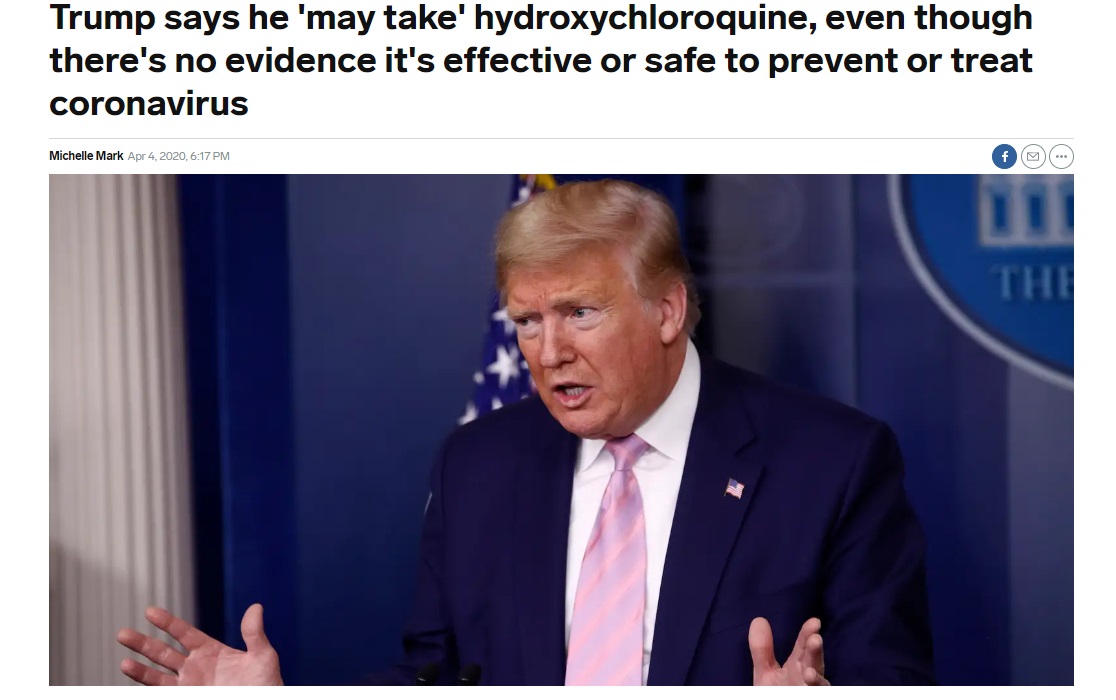
Can Hydroxychloroquine be used to fight Covid-19?
The question thousands of trained health professionals are asking: Hydroxychloroquine—is it an effective component in fighting Covid-19? To understand this, we must explore claims Incumbent President Donald Trump had made while also researching how this rumor came about.
What is Hydroxychloroquine?
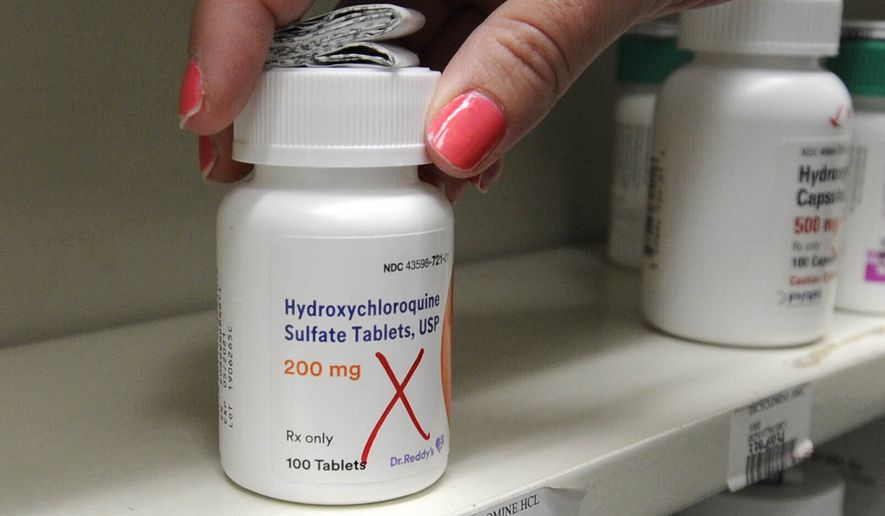
According to Drugs,com, Hydroxychloroquine is an antimalarial quinoline, which is a drug designed to prevent and combat Malaria, a parasitic disease transmitted through mosquito bites. However, it is also an immunosuppressant used to treat rheumatoid arthritis, as well as lupus, both of which are autoimmune diseases. According to President Trump, in an article published by Forbes, says he has 29 million doses of Hydroxychloroquine for the public.
Research: Going Upstream

I began searching for the first time President Trump made claims of Hydroxychloroquine’s effect on Covid-19, stumbling upon a few articles from The Daily Beast, who I have never heard of before. The first article I found was published on March 24, 2020, titled “Doctors are Hoarding Drug Trump Hyped—For Themselves!” knowing the article could have been less than truthful, I used it as an opportunity to go up stream to an article which was mentioned in the article I was reading, which had also been published by The Daily Beast. ““FDA Urges Caution After Trump Says Malaria Drug Will Be Available to Coronavirus Patients ‘Almost Immediately’”, and checking the date it was published, March 19, 2020, I had enough information to start double checking. Using that date, I began searching for press conferences Trump held around that day and found the one the Daily Beast article was referring to; I was checking because I wanted to know exactly what was said. Below is what I found.
What Claim Is Being Made?
President Donald Trump made a public address on March 19, 2020 discussing the use of already-approved FDA drugs to combat Covid-19.
It’s been around for a long time. So, we know that if…if things don’t go as planned, it’s not going to kill anybody. When you go with a brand new drug, you don’t know that that is going to happen. You have to see and go long tests, but this has been used […] And it’s shown very, very encouraging early results. And we’re going to make that drug available almost immediately. That’s where the FDA has been so great. […] It’s been approved. (President Trump).
Coronavirus outbreak: Trump says FDA has approved Chloroquine for COVID-19 testing
This was the first time President Trump discussed Hydroxychloroquine with the public, and he made it seem like the drug was a) already proven to combat Covid-19 and b) being endorsed by the FDA, going so far as to mention their approval. Stemming from this, the nation began looking for proof of the drug’s effectiveness…and the message that nation received the next day, March 20, 2020 was disconcerting. When asked if Hydroxychloroquine was a prophylaxis, a drug meant to prevent the contagion of the disease, the response was this:
The answer is no. The evidence you’re talking about is anecdotal evidence. As the commissioner of the FDA and president mentioned yesterday, we’re trying to strike a balance between making something with the potential of an effect to the American people […] the information you are referring to specifically is anecdotal. It was not done in a controlled clinical trial, so you really can’t make a definitive statement about it.
Coronavirus outbreak: Trump says FDA has approved Chloroquine for COVID-19 testing
So, what Trump had claimed the day before was recanted, to a degree, being rephrased as anecdotal evidence. And just to make sure I was understanding everything as it was said, I referenced Politifact, which confirmed the evidence for Hydroxychloroquine was anecdotal.
What is Anecdotal Evidence?

I turned to Wikipedia to find an answer to this, and went upstream to verify what anecdotal evidence means. According to James Goodwin in his “Research in Psychology: Methods and Design”, anecdotal evidence is “specific instances that seem to provide evidence from some phenomenon [but mainly from] testimonials from people who have (apparently) improved their lives.” So, anecdotal evidence consists of testimonials, stories about tests outside of the scientific method which often lack a control group. And without a control group, the actual results, in this case of Hydroxychloroquine on Covid-19 patients, are impossible to pinpoint. An additional risk carried by this type of data is cherry picking, which is when results are manipulated to make a product appear to have a desired result, but lack the actual data to prove it.
What Evidence is Trump Referencing?

When referencing Politifact for information on the tests Trump was referring to, I went upstream and found the document of the French Hydroxychloroquine study. It essentially acknowledged there was no control group at the facility where the treatment was being given, but another facility where people weren’t receiving treatment acted as a stand-in for a control group. 20 of the Covid-19 patients who were treated with Hydroxychloroquine were cured of the disease within 6 days, which brought the conclusion hydroxychloroquine accelerates the healing time-table.
Conclusion
There is only anecdotal evidence, testimonials, which make us believe hydroxychloroquine can cure Covid-19. The tests done leave too much room for errors and result manipulation, but that does not mean the study should be ignored completely. Further studies will need to be done to definitively say Hydroxychloroquine can cure Covid-19. Until proper evidence and data can be collected, this is a false claim.
So, Why is Trump Still Endorsing Hydroxychloroquine?
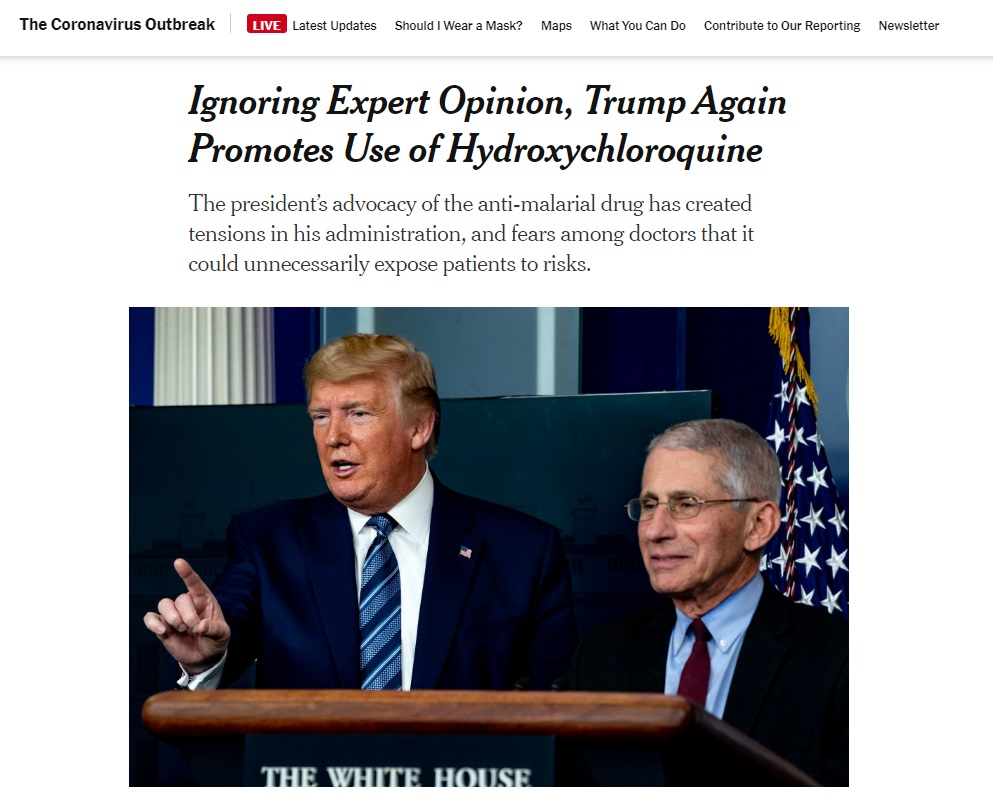
President Trump is following anecdotal evidence, promising salvation from something that may have absolutely no impact on Covid-19. What Trump is doing is reckless and dangerous without solid evidence. So why is he doing it?
In the interview shown earlier, Coronavirus outbreak: Trump says FDA has approved Chloroquine for COVID-19 testing, a reporter asked Trump, “It is possible that your impulse to put a positive spin on things may be giving Americans a false sense of hope?” to which Trump replied, “No, I don’t think so. […] Look, it may work or it may not work. I feel good about it. It’s just a feeling. I’m a smart guy and I feel good about it.”
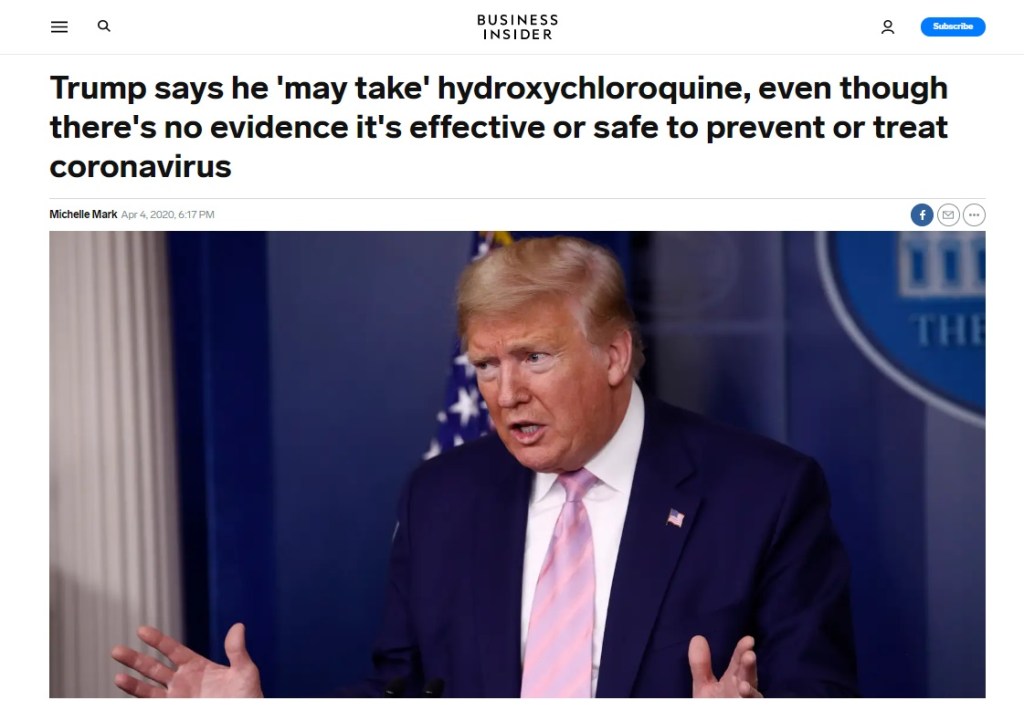
In the same interview, Trump said, “I’m not being overly optimistic or pessimistic. I sure as hell think we outta give it a try.[…] There’s been some very good things happen. Let’s see what happens. We have nothing left to lose.” So, now, all we can do is wait and see if Hydroxychloroquine affects Covid-19. And we’ll see if the president is right in his presumption.
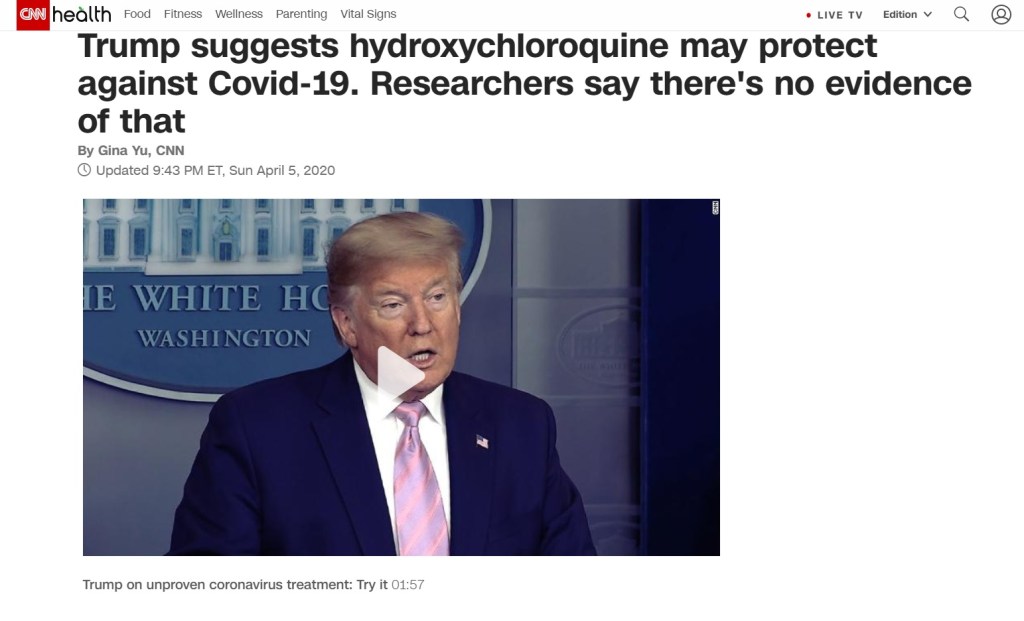
Before our president announces important information to our country—especially based on anecdotal evidence, I suggest he finds a competent fact checker.
More Updated info from the New York TImes: https://www.nytimes.com/article/coronavirus-hydroxychloroquine-malaria.html
 Writing, Research, and Technology